
Monobloco.
What if a wardrobe didn't have to be built into the wall?
Giving a room
its freedom back.
Monobloco was born from a frustration: a bedroom that had lost its freedom because of built-in furniture.
From plank
to volume.
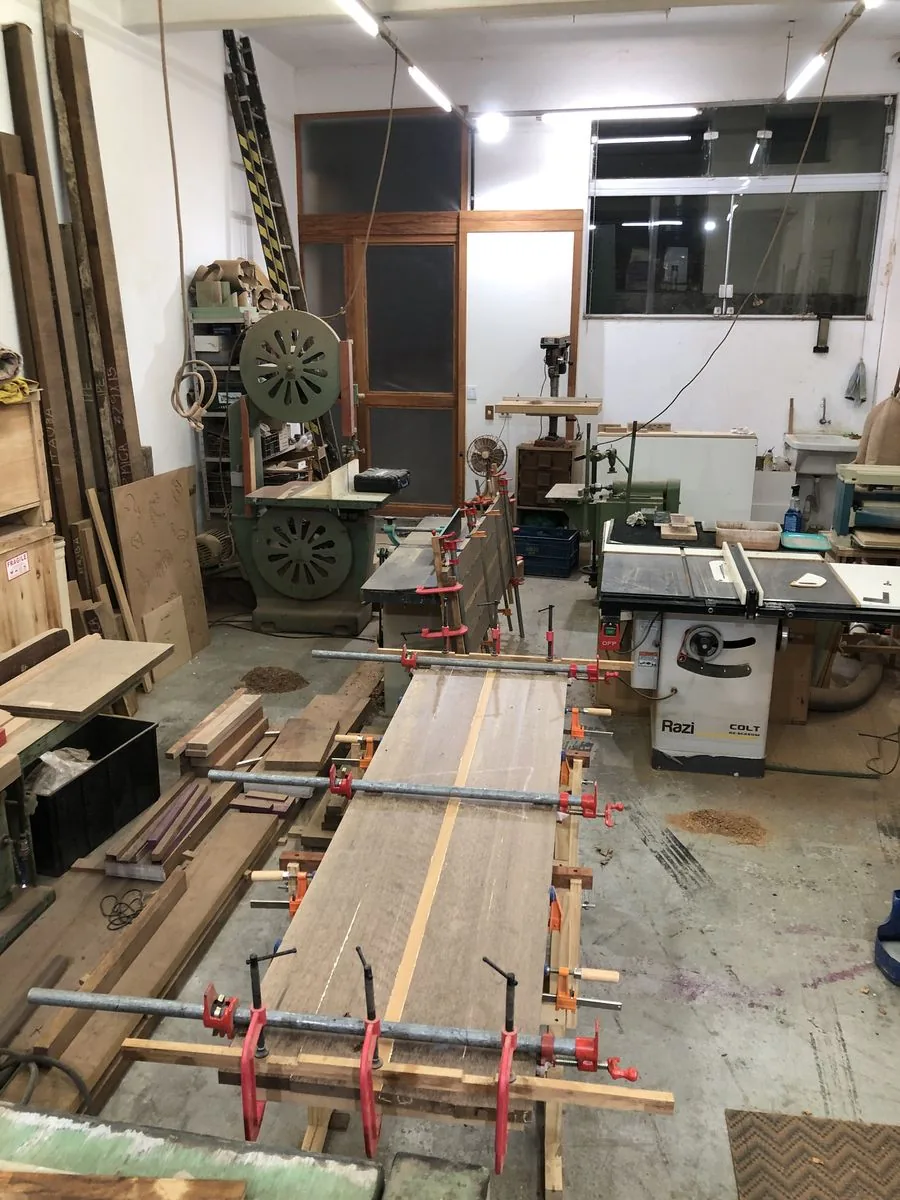
Catuaba planks and peroba-mica strips are glued side by side and pressed in clamps to form the sides of the volume.
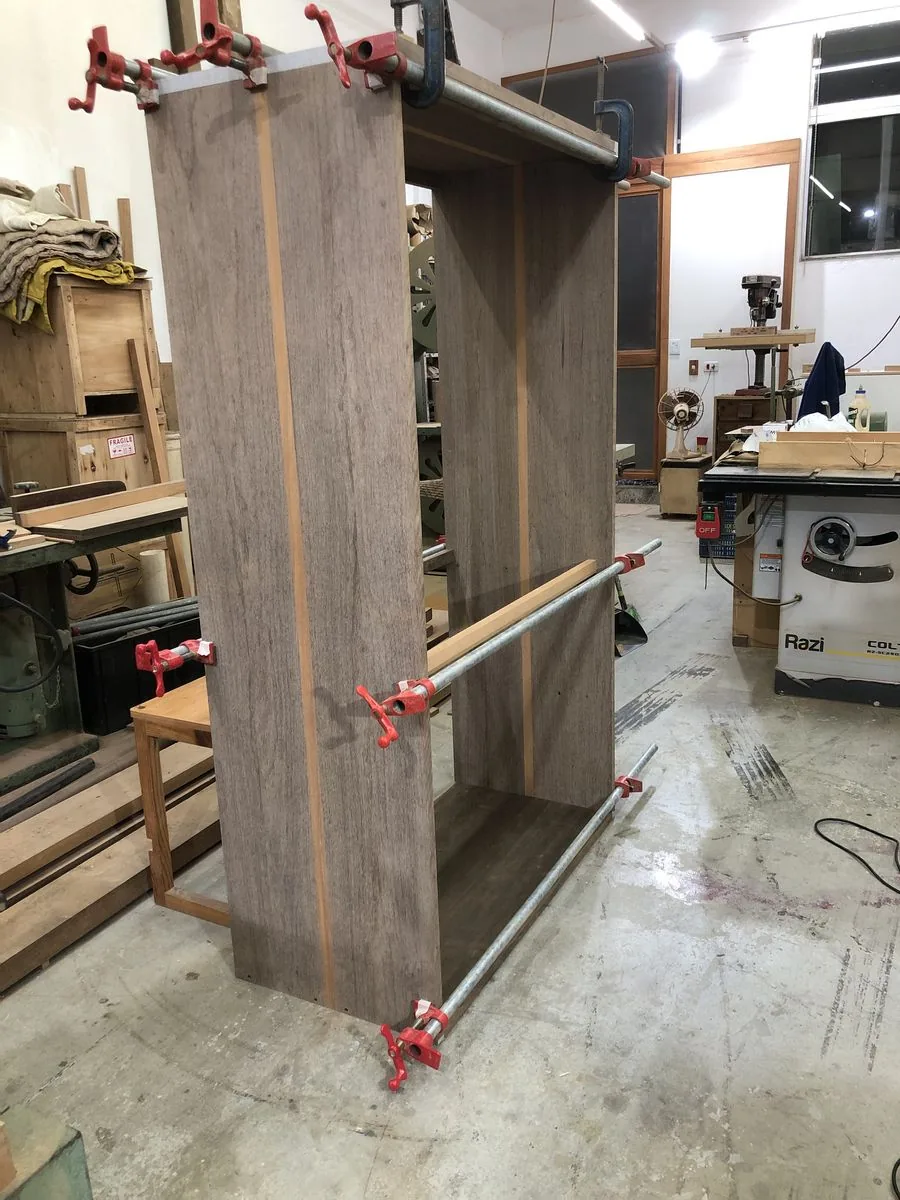
With the sides ready, the wardrobe carcass is assembled upright and squared while still under pressure.
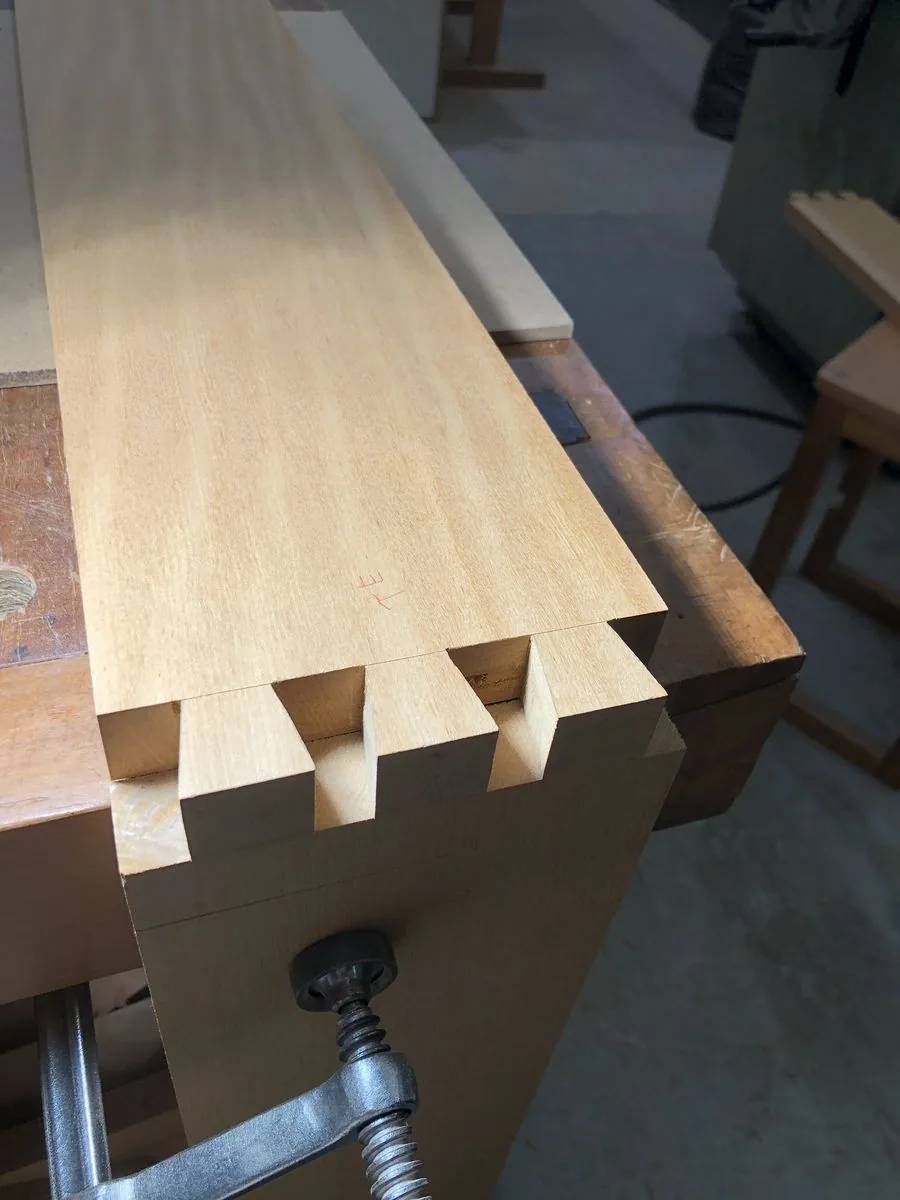
The joints of the peroba-mica base are marked out and cut by hand, tail by tail, at the workbench.
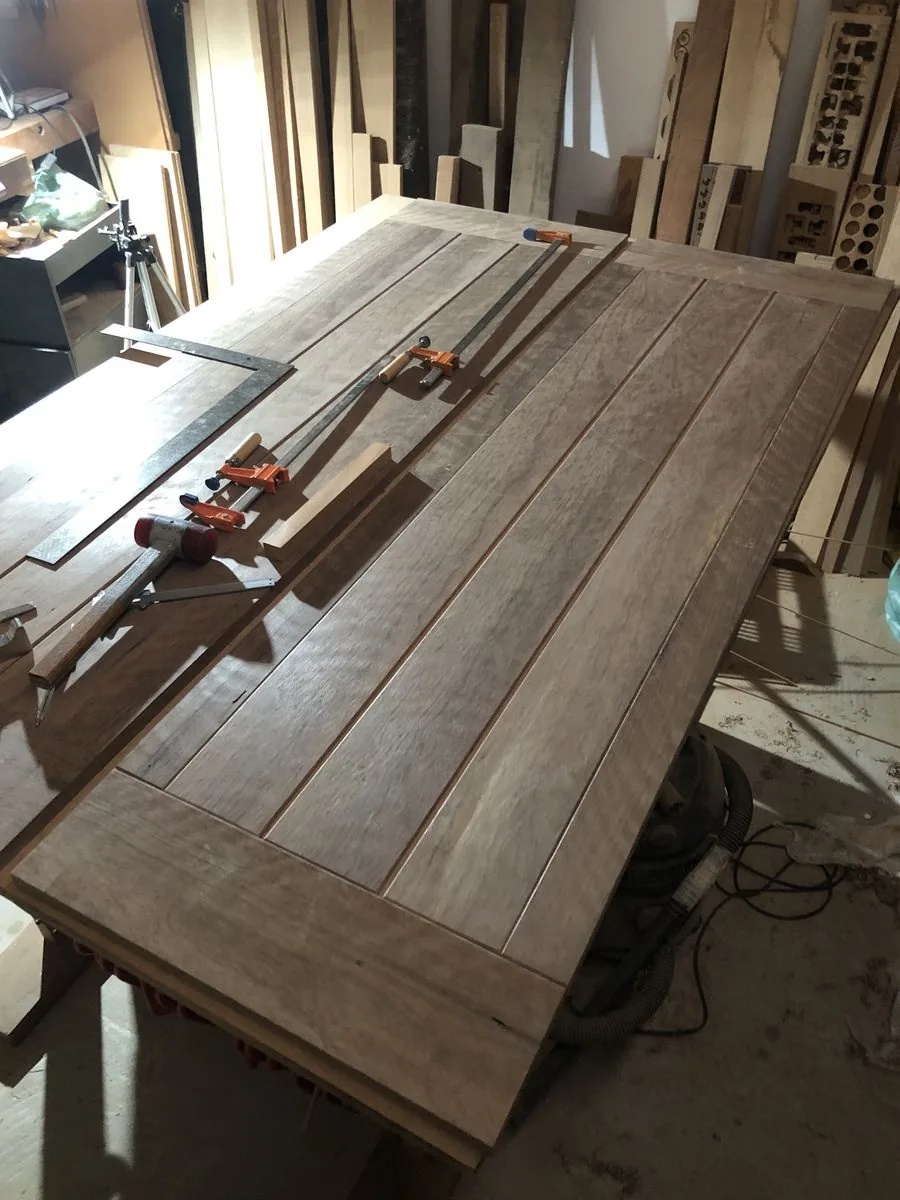
The doors are frame-built, with catuaba boards set off by light strips, and fitted before finishing.
Two woods,
one volume.
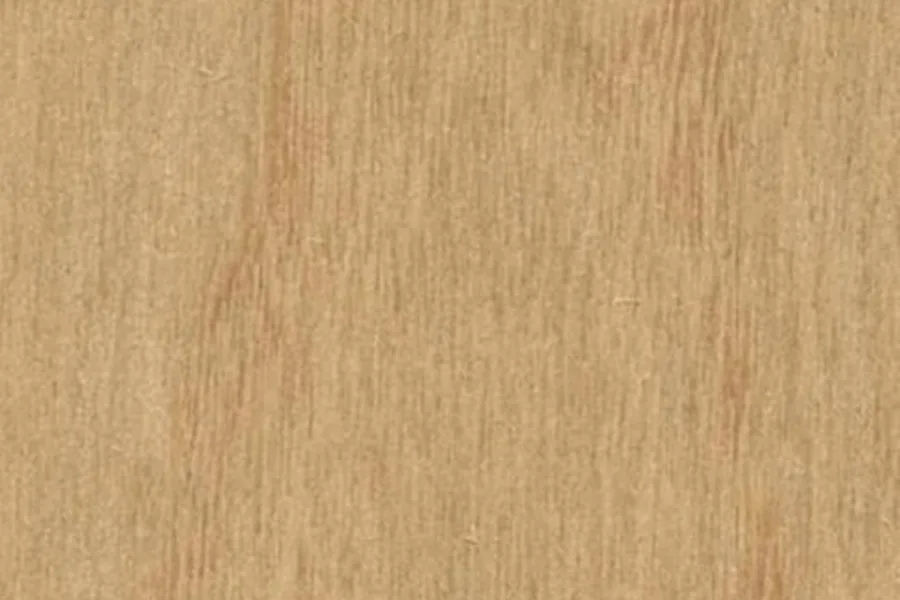
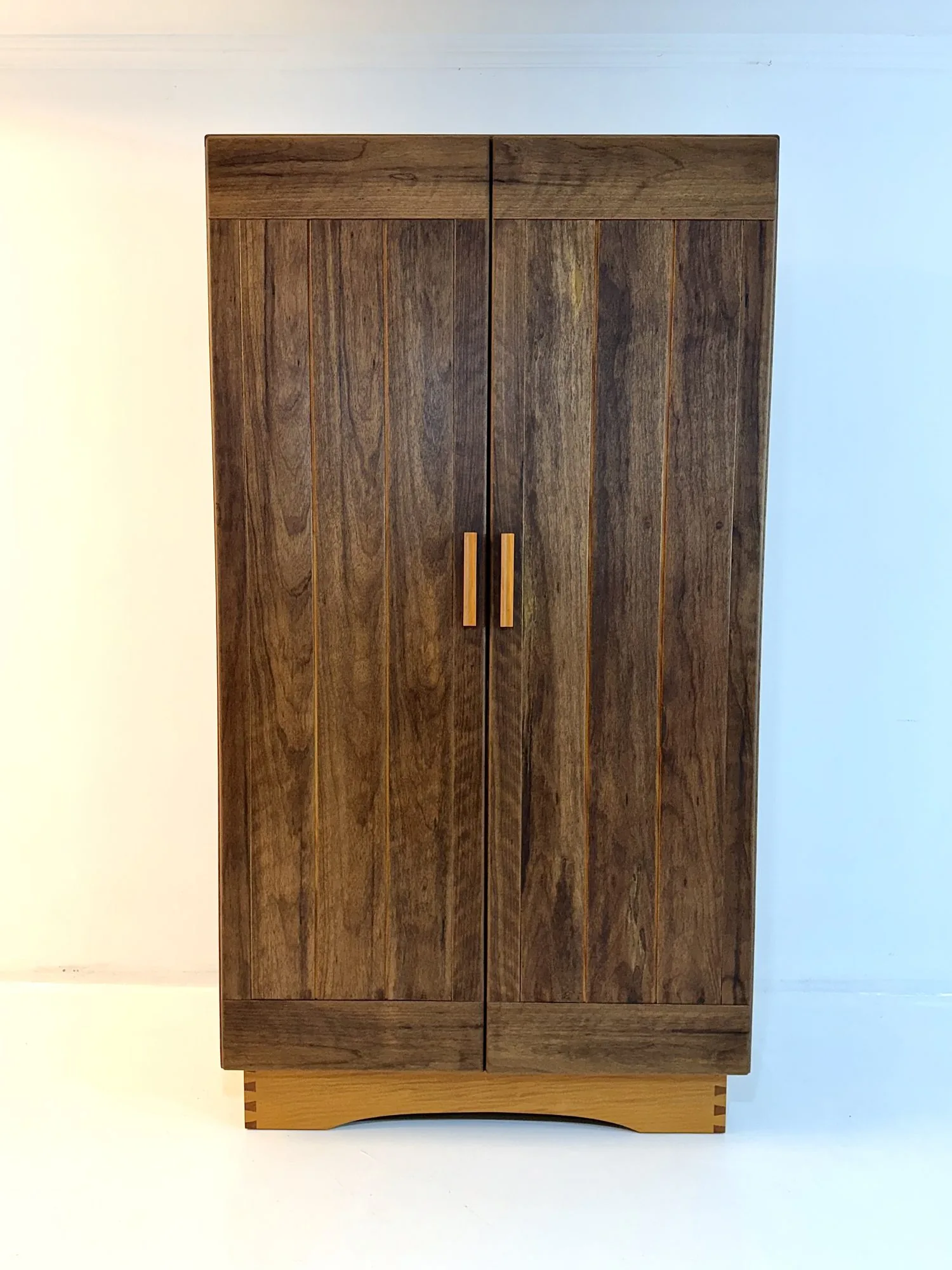
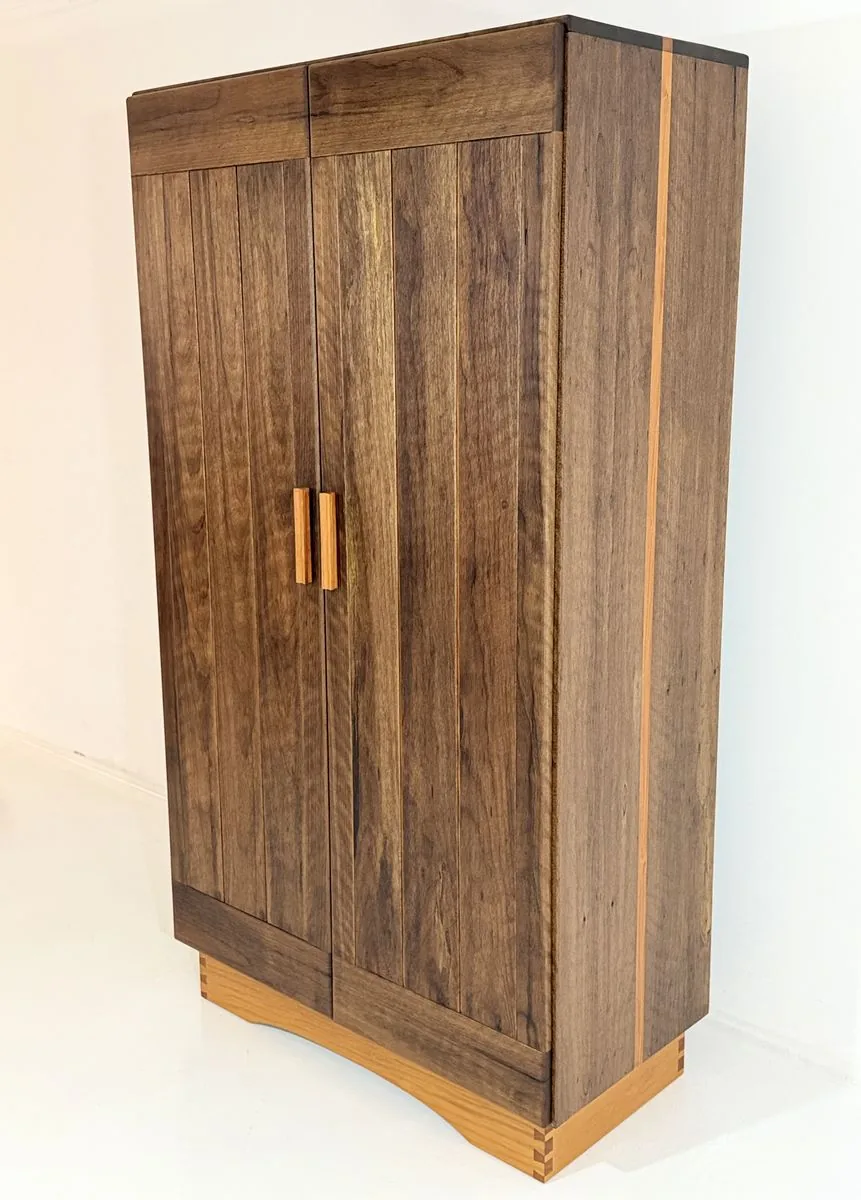
Brown in tone with a striking grain: this is the wood that shapes the outside of the Monobloco — sides, top and doors.
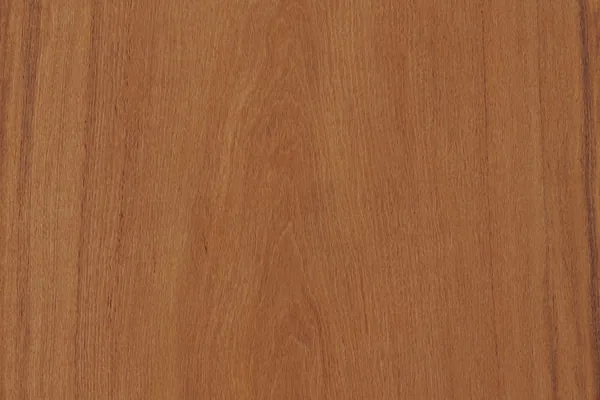
Lighter, it appears where the piece gets organised: in the dovetailed base, the inner drawers and the strips that mark the doors.
Where the volume
fits together.
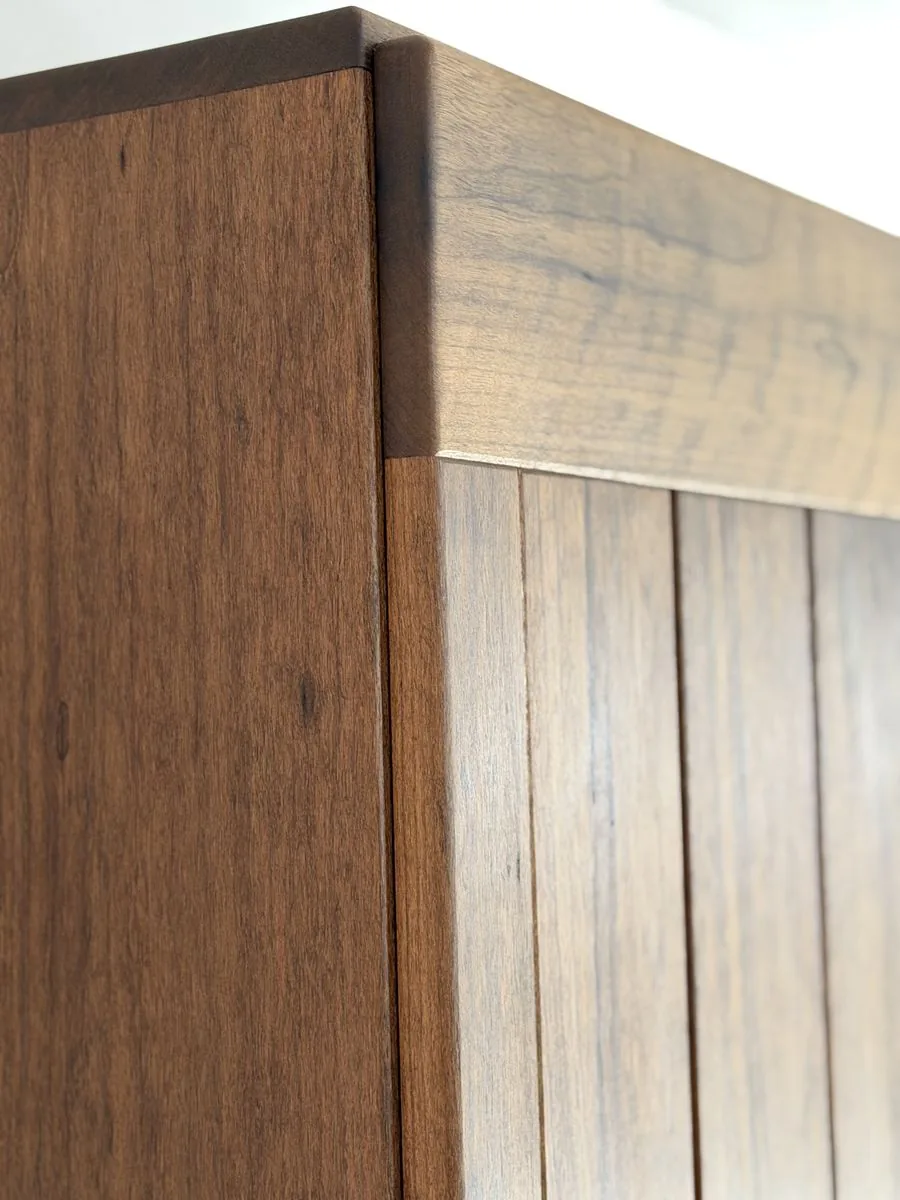
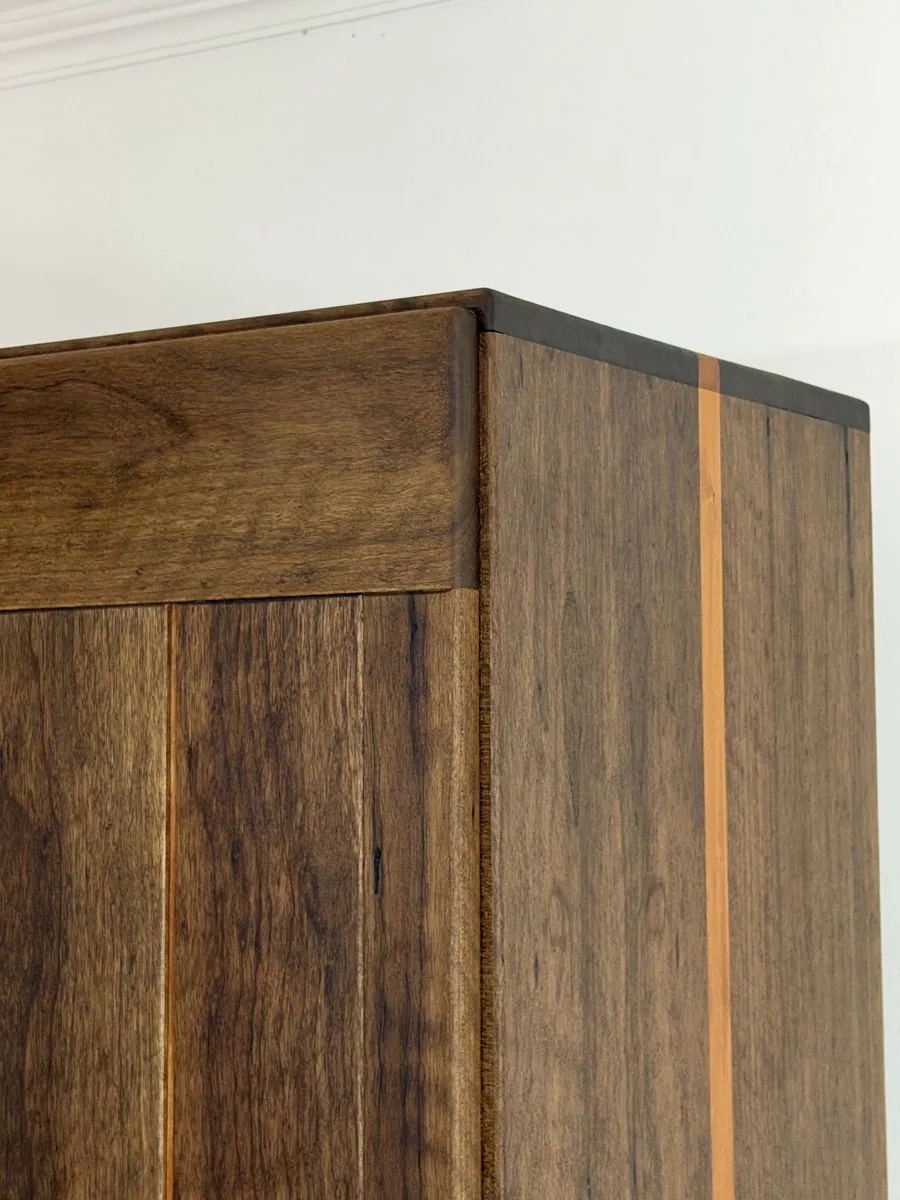
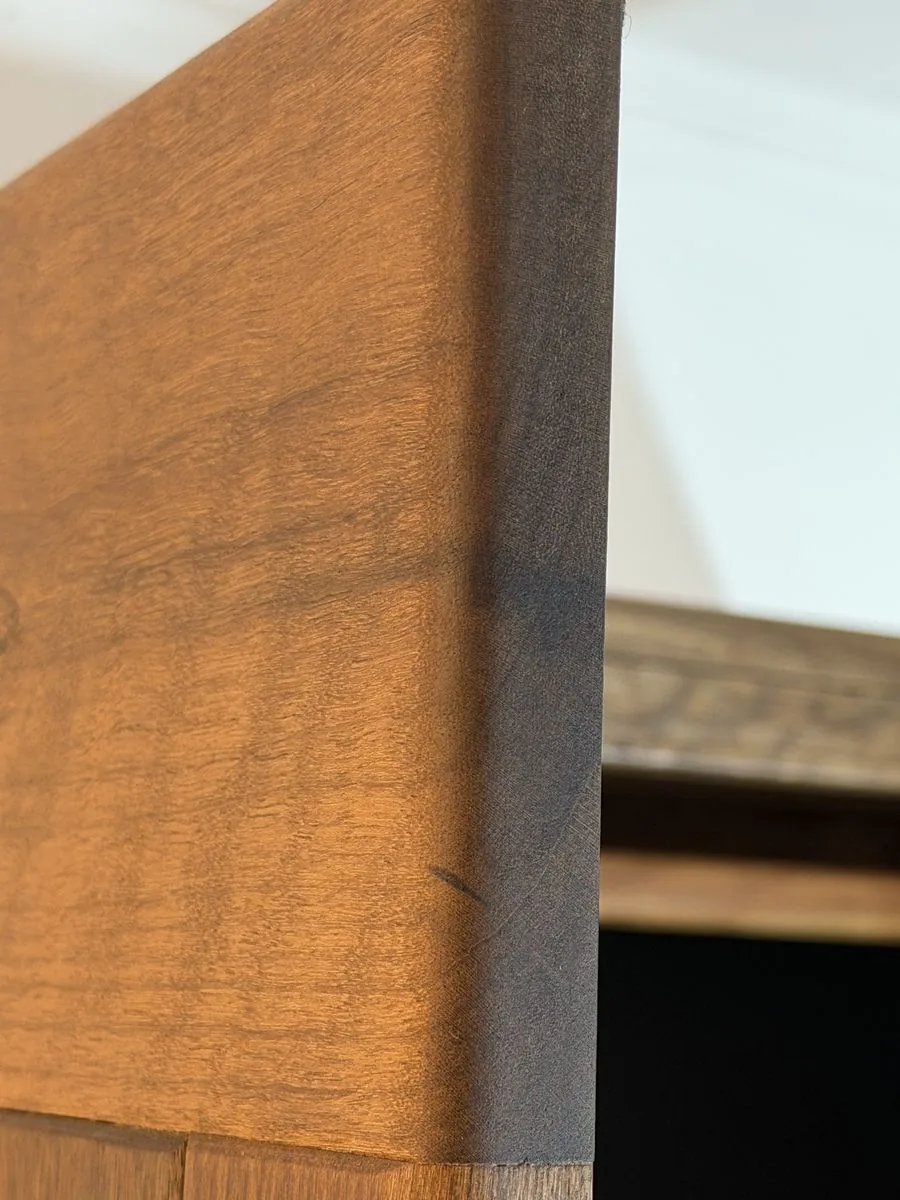
At the top corner, the catuaba doors meet the top in a clean joint, while the peroba-mica strips give rhythm to the surface.
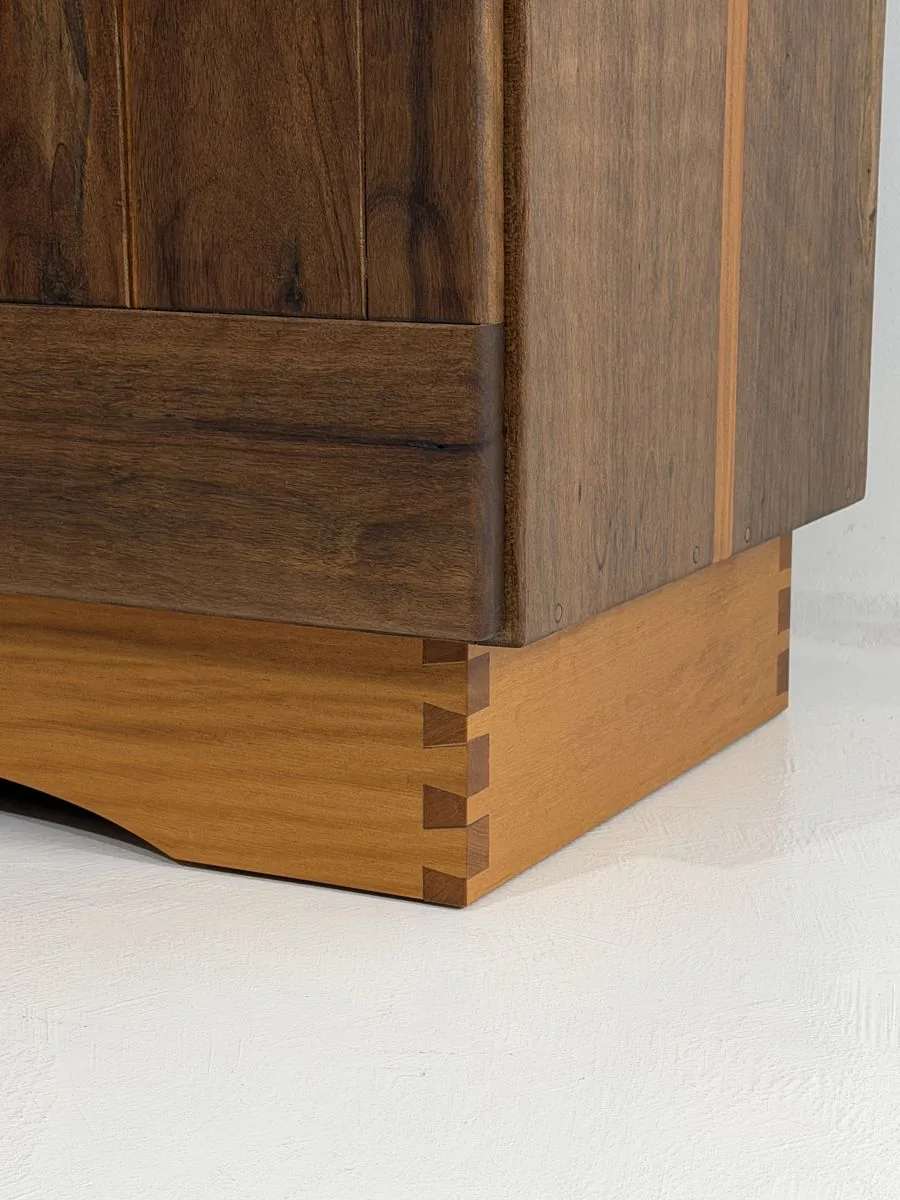
The peroba-mica base is joined at the corners with exposed dovetails and hides the casters that let the volume move.
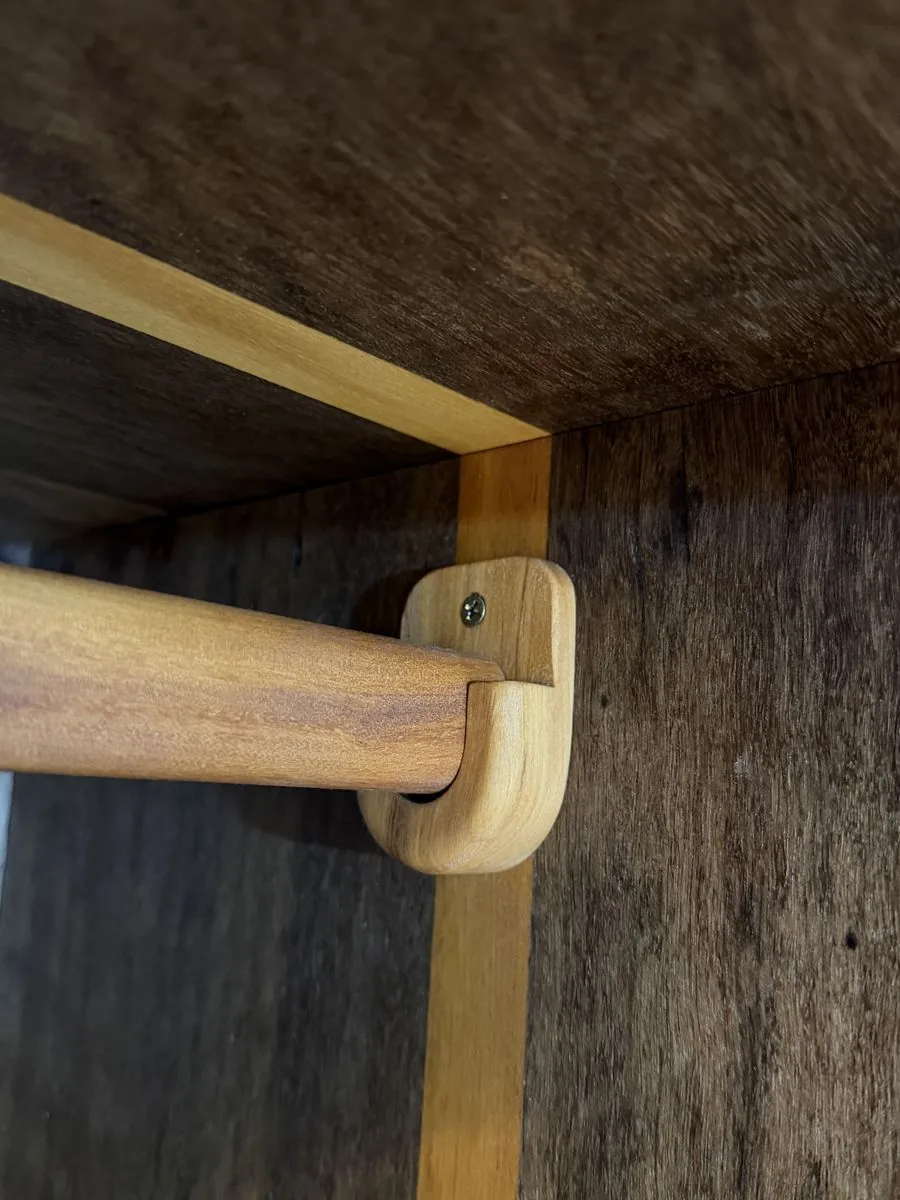
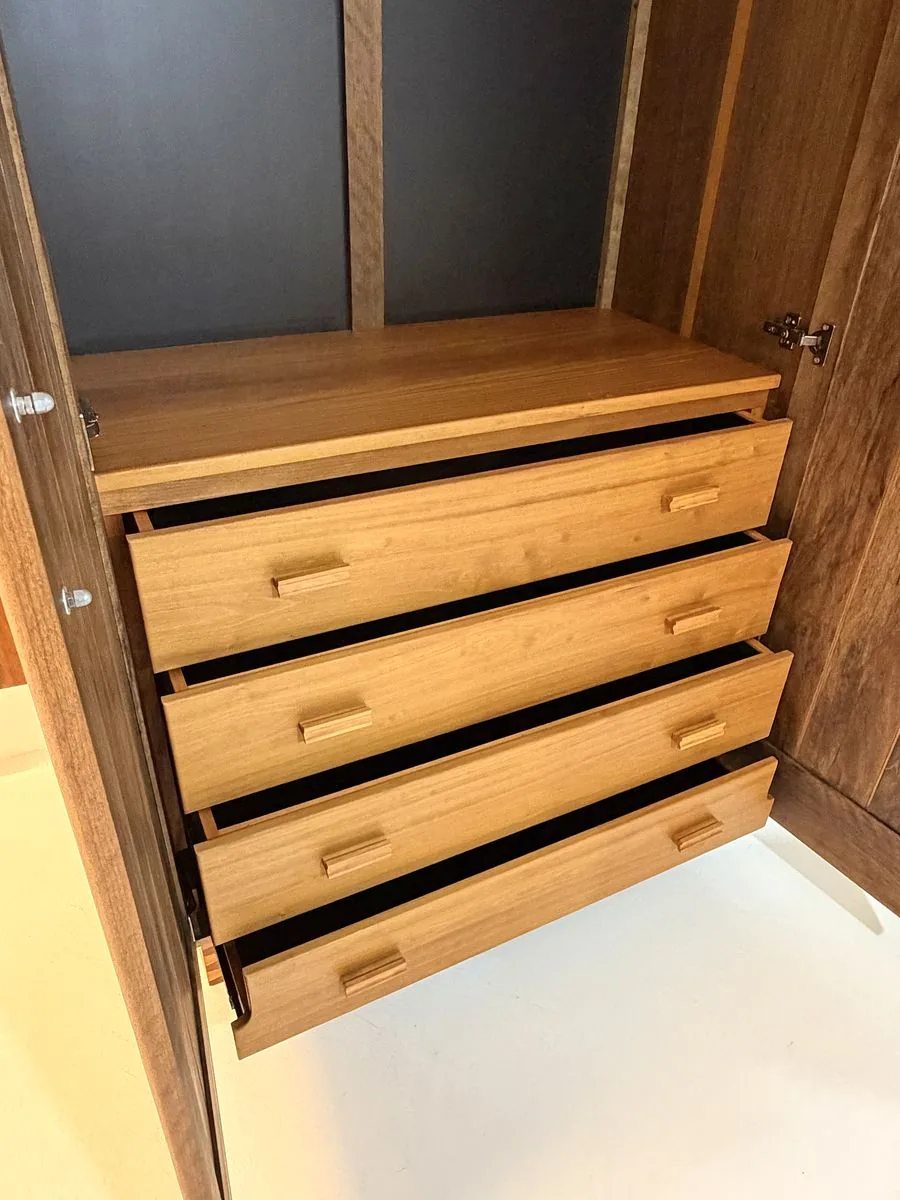
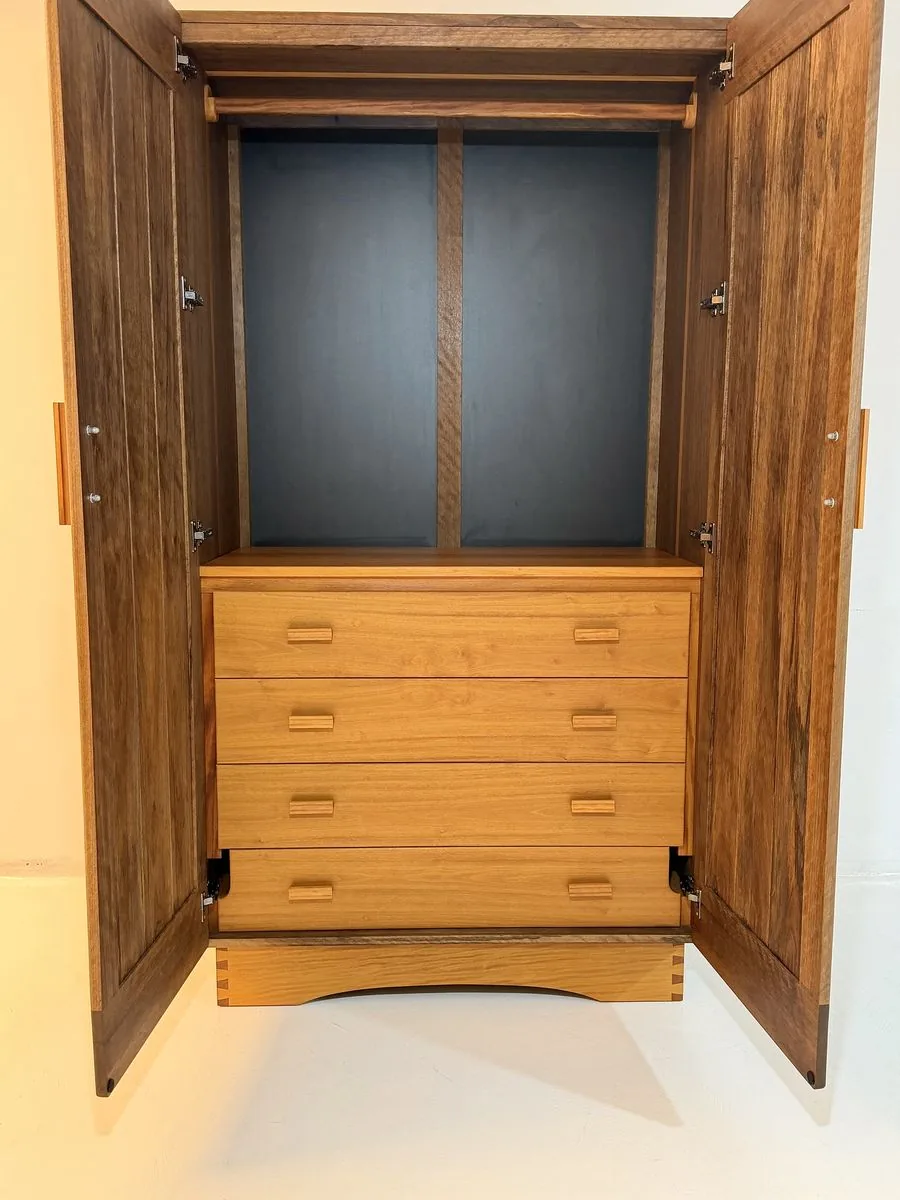
Inside, a hanging rail and drawers in light wood: everything the room needed, gathered into a single volume.
That idea gave
birth to the Monobloco.
A single volume in solid wood, built in catuaba and peroba-mica, resting on a base with hidden casters so it can move and take different positions in the room. Inside, it holds a hanging rail, three large drawers and a shoe drawer, bringing different needs together in one volume. Dimensions: 110 (L) × 54 (W) × 196 (H) cm.
Have a piece in mind?
Tell us about the space, the use and the wood you love. We'll design it together from there.
Chat on WhatsApp → (opens in a new tab)